Parkhomov's Open LENR Replication: Igniting New Research Paths
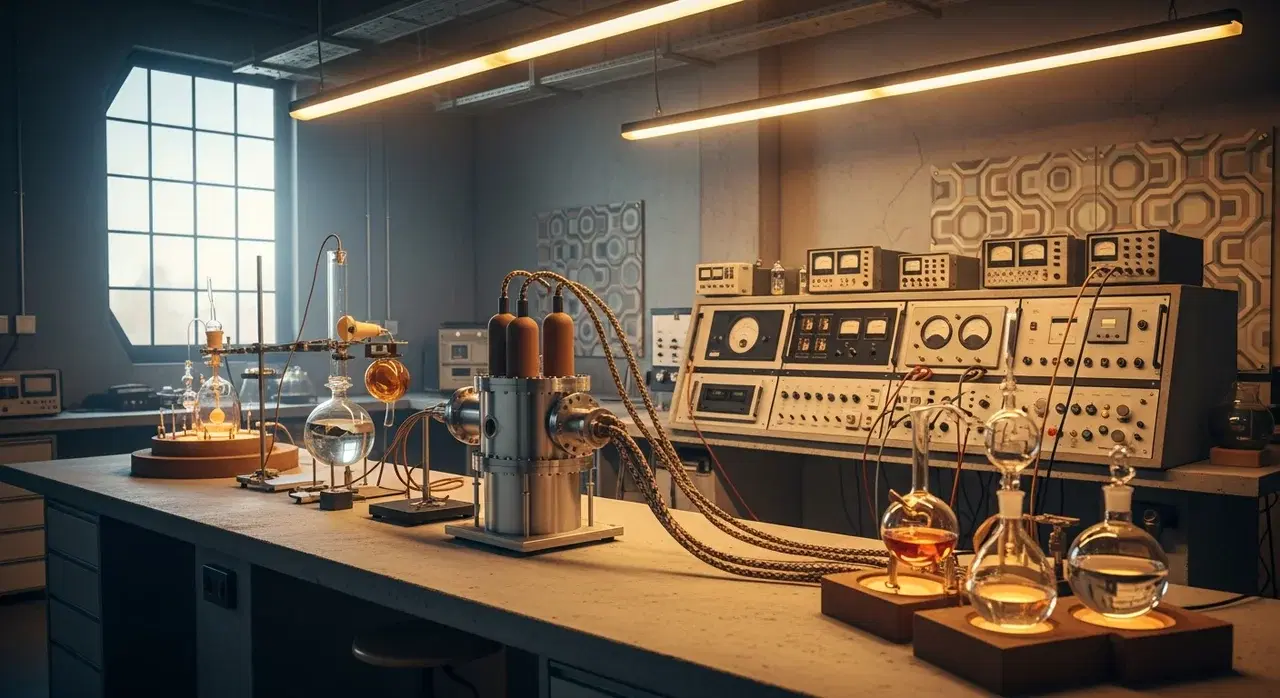
LENR: The Path Forward Through Open Experimentation
As we navigate 2026, the potential of Low Energy Nuclear Reactions (LENR) as a transformative clean energy source remains a key area of innovation. While the field is still rigorously experimental, transparent, replicable research is paramount for its progress. A pivotal example of this comes from reflections on the ICCF-19 conference, particularly the lasting impact of Dr. Alexander Parkhomov's work, as highlighted by David French.
The Spark of Replication: Parkhomov's Enduring Legacy
In December 2014, Dr. Alexander Parkhomov, a retired physicist from Lomonosov Moscow State University, openly shared what many considered a breakthrough: a replication of an excess heat effect, reminiscent of earlier claims by Andrea Rossi. Parkhomov's significance lay in both the demonstration of substantial excess heat—achieving a Coefficient of Performance (COP) up to 2.74:1 by boiling water—and his commitment to transparency. He openly disclosed his materials: powdered nickel and lithium aluminum hydride (LAlH4), with his ceramic reactor operating at approximately 1100°C.
His original boiling-water demonstration video, coupled with his willingness to engage openly with questions at ICCF-19, set a new standard. This transparency, crucial for scientific validation, cemented the integrity of his findings and demonstrated that a simple, yet effective, calorimetry method could establish a clear excess heat event.
David French's Vision: A Call to Focused Experimentation
David French, reflecting on ICCF-19, stresses that advancing LENR requires a concentrated effort on new, focused, and creative experiments to "lift the veil" on its underlying mechanisms. He proposes specific, actionable variations to Parkhomov's experimental setup, designed to systematically explore the conditions for excess heat generation:
Practical Experimental Designs for Replication and Discovery
French's agenda offers a clear roadmap for researchers, hobbyists, and institutions:
- Optimized Reactor Geometry: Vertically orient the apparatus, stacking materials (e.g., nickel powder above hydride) within a highly insulative environment like a Dewar vacuum flask, capable of tolerating temperatures up to 1400°C.
- Controlled Heating & Calorimetry: Maintain internal temperatures between 1100-1300°C. Utilize the boiling water method for initial validation of excess heat (COP > 1:1), with options for more precise calorimetry once established.
- Key Variables for Systematic Testing: Investigate specific parameters to understand the effect's response:
- Material Separation: Test the impact of physically separating the hydride from the nickel powder.
- Hydride Composition: Substitute other hydrides (e.g., MgH2, CaH2, NaBH4) to determine the necessity of lithium or aluminum.
- Hydrogen Access: Use a Palladium filter to ensure only hydrogen reaches the nickel, isolating vapor influences.
- Environmental & Material Factors: Explore effects of temperature, hydrogen pressure, collateral metals, heating method (AC/DC, magnetic fields), and substitution of other powdered metals (Palladium, titanium).
- Isotope Effects: Replace hydrogen with deuterium gas.
Implications for Our Diverse Community
Parkhomov's open approach and French's detailed experimental framework offer significant value across the LENR Buyer Guide community:
- Investors: Transparency and clear experimental roadmaps significantly de-risk the technology and accelerate commercial viability.
- LENR Researchers and Technologists: This provides concrete, actionable experimental designs and material specifics, invaluable for replication and advanced R&D.
- Preppers and Off-Grid Enthusiasts: The continued progress in replicable LENR points towards future self-sufficient, resilient energy solutions, reinforcing long-term energy independence goals.
- Ecologists and Clean Energy Advocates: Openly demonstrated, replicable excess heat strengthens the scientific case for LENR as a zero-emission, sustainable alternative.
- Hobbyists and Experimenters: Parkhomov's accessible methods, combined with French's detailed proposals, offer clear entry points and advanced avenues for safe and meaningful experimentation.
Looking Ahead: The Veil Continues to Lift
Dr. Parkhomov's generosity and David French's call for rigorous, open experimentation are precisely what the LENR field needs in 2026. By systematically probing the critical parameters, we move closer to unlocking this profound mystery, paving the way for a future powered by clean, abundant LENR energy.
References and Further Reading
- Parkhomov's "Christmas gift" article: Russian Cold Fusion Research Group Replicates Rossi's E-Cat
- Parkhomov's Boiling Water Demonstration: https://www.youtube.com/watch?v=VORyf-2ZC-g
- Parkhomov's Steam Production: https://www.youtube.com/watch?v=SDtMd9-1w1s
- Parkhomov Reactor Glowing Yellow: https://www.youtube.com/watch?v=_p_HuXjtDic
- Rossi Lugano Report: Report on the Investigation of the Lugano E-Cat
- Parkhomov Answering Questions at ICCF-19: https://www.youtube.com/watch?v=XWtxnkaDSU0
- Lithium Aluminum Hydride (Wikipedia): https://en.wikipedia.org/wiki/Lithium_aluminium_hydride
- Dewar Vacuum Flask (Wikipedia): https://en.wikipedia.org/wiki/Vacuum_flask
- Magnesium Hydride (Wikipedia): https://en.wikipedia.org/wiki/Magnesium_hydride
- Calcium Hydride (Wikipedia): https://en.wikipedia.org/wiki/Calcium_hydride
- Sodium Borohydride (Wikipedia): https://en.wikipedia.org/wiki/Sodium_borohydride
Related Articles
Fleischmann-Pons Boil-Off: Recalling LENR's Foundational Heat
Explore the historical Fleischmann-Pons boil-off experiment via recently shared archival footage and an accessible LENR introduction. Crucial context for our community.
LENR Ontology Update v8: Standardizing Cold Fusion Research
A significant update to the "Corrected Ontology related to Cold Fusion" (v8) marks a crucial step towards standardizing LENR research and accelerating development.
Open LENR 1: Community-Driven Cold Fusion Research
Explore 'Open LENR 1,' a Reddit discussion potentially signaling a collaborative push for accessible, open-source Low Energy Nuclear Reactions. What does this mean for clean energy?