ENG8 EnergiCell: From Lab to Industrial Prototypes (TRL 7)

ENG8 EnergiCell: A Leap Forward in LENR Technology
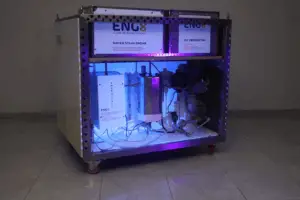
As of March 2026, the Low Energy Nuclear Reaction (LENR) landscape is buzzing with exciting news. ENG8 International Limited, a deep-tech energy company with its demonstration lab in Portugal, has announced a significant advancement for its proprietary EnergiCell® LENR technology. The company reports a leap from Technology Readiness Level (TRL) 4 – laboratory validation – to TRL 7, indicating a move into industrial prototyping. This is a crucial milestone that could bring LENR closer to mainstream adoption.
What This Means for LENR: Understanding TRL Levels
For those new to LENR, it's the science of producing clean, abundant energy through nuclear reactions at low temperatures, without the harmful radiation or radioactive waste associated with conventional nuclear fission. The promise of LENR lies in its potential for decentralized, sustainable power generation.
The concept of Technology Readiness Levels (TRLs) is vital for understanding a technology's maturity.
- TRL 4 (Laboratory Validation): Components and/or breadboard parts are validated in a laboratory environment, meaning the science works under controlled conditions.
- TRL 7 (Industrial Prototyping): Prototype demonstration in an operational environment. This signifies the technology is ready for real-world testing and optimization, moving beyond lab benches to pre-commercial designs.
ENG8's jump from TRL 4 to TRL 7 suggests successful demonstration in a relevant environment, now focusing on refining for practical, industrial applications, using predominantly commercially available off-the-shelf (COTS) components. This COTS approach could significantly accelerate development and reduce eventual manufacturing costs.
The EnergiCell®: ENG8's Ambitious Claims
ENG8's EnergiCell reactors utilize a patented, plasma-based catalysed process to ionise a working fluid, like water, using high-voltage, high-frequency electricity. This process is claimed to create conditions for LENR reactions, leading to significant energy output. "Independent validations confirm self-sustaining operation and net energy export capability," according to ENG8.
They report impressive Coefficient of Performance (COP/Q) figures:
- 7–10 for thermal/steam/gas applications.
- 5–7 for direct electricity generation.
- 6 for LENR-enhanced water electrolysis, yielding HHO, hydrogen, and oxygen gases.
Furthermore, ENG8 is targeting a capital cost of just €500k per MW and a generation cost of €15 per MWh – figures highly competitive with traditional energy sources.
Modular Systems and 2026 Milestones
ENG8 is showcasing a 100 kW Modular Steam Generator at the 17th International Workshop on Anomalies in Hydrogen Loaded Metals (IWAHLM-17) in Bergamo, Italy (March 24–26, 2026). This system, with a COP of 7–10, can reportedly achieve up to 200 kW thermal and drive a 35 kW rotary steam expander. Key 2026 milestones include launching this 100 kW thermal power generator for an "energy-as-a-service" model, with commercial thermal energy sales commencing in Q4 through customer trials. They also aim for a 100 kW net electricity output by 2027 and envision sub-kW units for broader licensing.
Our Take: Implications and Outlook
ENG8 International's claims represent a potentially groundbreaking step for LENR. The reported jump to TRL 7, combined with independent validations and ambitious performance targets, paints a highly optimistic picture. For investors, this signifies a high-potential opportunity, though careful due diligence and observation of upcoming trials are essential. Researchers and technologists will find the COTS approach and detailed mechanism intriguing, with the IWAHLM-17 presentation being a key engagement point. Preppers and off-gridders should note the promise of modular, self-sustaining energy and future sub-kW units for resilience. Ecologists and clean energy advocates will be drawn to the zero-emission, scalable potential and competitive costs. Even hobbyists might see future pathways to accessible LENR.
As a trusted resource, LENR Buyer Guide advises our community to maintain rigorous honesty while embracing this optimism. The shift from lab to industrial prototyping is a significant technical hurdle overcome, but commercial viability and widespread deployment will depend on consistent performance, long-term reliability, and transparent, independently verified data. We encourage engagement with ENG8 and look forward to reporting on the outcomes of their initial commercial trials. The future of clean energy continues to unfold, and ENG8's EnergiCell is certainly a development to watch.
References
- ENG8 International Limited: www.eng8.energy
- E-Cat World Press Release: Press Release: “ENG8 Advances Its EnergiCell® LENR Technology from Lab (TRL 4) to Industrial Prototyping (TRL 7)”
Related Articles
E-Cat SSM Generator Achieves 3+ Months Uninterrupted Operation
Andrea Rossi's E-Cat SSM generator reports 3+ months of continuous operation across 20 test units, signaling progress for LENR. What does this mean for investors, researchers, and preppers?
LENR's Role in a Shifting Global Energy Landscape: 2026 Outlook
E-Cat World highlights energy tech's impact on nations. We explore LENR's potential to drive this change, offering insights for investors, researchers, and preppers.

ENG8 EnergiCell Webinar: Investment & Tech Update for 2026
Join ENG8 on May 27th, 2026, for a live investor webinar and lab tour exploring their EnergiCell product. Discover commercial updates and LENR's evolving investment landscape.