LENR's August 2025 Momentum: Nature Paper & Commercial Growth
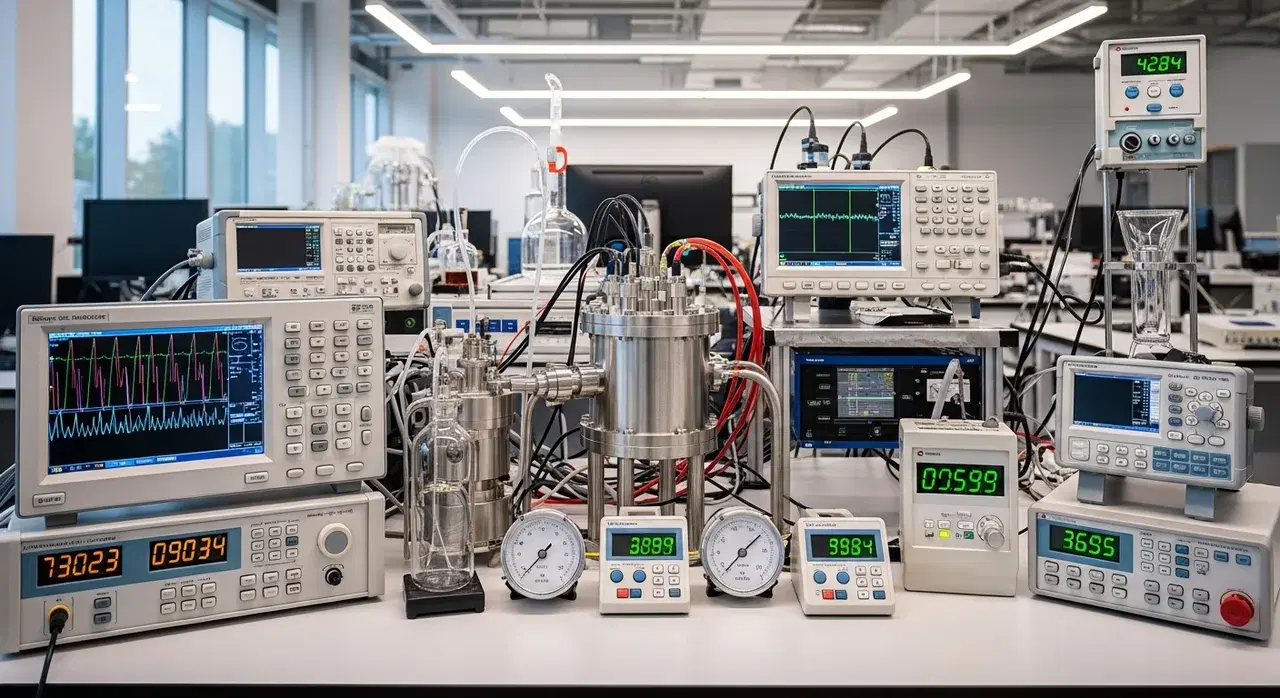
August 2025: A Landmark Month for LENR Progress
The Low Energy Nuclear Reactions (LENR) field continues its steady march towards mainstream acceptance and commercial viability, with the August 2025 LENR Forum Newsletter highlighting a truly significant scientific validation and a surge in commercial activity. For potential buyers and enthusiasts tracking the maturation of this emerging energy technology, these developments signal a pivotal moment, affirming both the scientific basis and growing investor confidence in LENR systems.
Breakthrough in Peer-Reviewed Science: Nature Publication
The most striking news is the publication of a second LENR paper in the highly prestigious scientific journal, Nature. Titled "Electrochemical loading enhances deuterium fusion rates in a metal target," the paper by Curtis P. Berlinguette and colleagues presents robust experimental evidence.
The research describes a benchtop fusion reactor where a palladium metal target, when electrochemically loaded with deuterium, showed a 15(2)% increase in deuterium–deuterium fusion rates. This is a monumental finding because it demonstrates that energy applied at the electronvolt scale (electrochemical loading) can significantly influence nuclear reactions at the megaelectronvolt scale. The implications are profound, as it provides further empirical backing for the existence of LENR phenomena and hints at scalable, controllable energy generation mechanisms that deviate from traditional 'hot' fusion approaches.
Read the full paper here: Electrochemical loading enhances deuterium fusion rates in a metal target | Nature
Commercial Momentum Builds in the LENR Sector
Beyond scientific validation, August 2025 also showcases a vibrant commercial landscape for LENR, with new entrants and significant funding rounds:
New Players Emerge with Open-Source Ambitions
Aqua Engineering has recently appeared on the radar. Founder Jason Kocher is championing an open-source approach to LENR reactor development, specifically focusing on sonoluminescence. This open-science strategy could accelerate innovation by fostering collaborative development and reducing barriers to entry for researchers and developers. His game plan is detailed on GitHub.
Investment Confidence Soars for HYLENR
HYLENR has successfully closed its Pre-Series A funding round. This crucial capital injection will enable the company to move rapidly "from pilot to market launch." The funding signifies growing investor confidence in LENR as a viable alternative to fossil fuels, driven by the technology's breakthrough heat energy amplification and scalable commercial systems.
Brilliant Light Power Continues Active Development
Brilliant Light Power (BLP) remains a highly active player. Following their move to a new facility in Pennsylvania, BLP is continuing to pursue its SunCell technology. Beyond energy generation, BLP also continues to present intriguing claims, including a reactionless propulsion Space Drive, generating considerable discussion within the community. For more information:
- Good BLP summary: https://newfireenergy.substack.com/p/brilliant-light-powers-suncell-a?utm_campaign=email-half-post&r=ozwi5&utm_source=substack&utm_medium=email
- Space Drive follow-up: https://hydrogenrevolution.substack.com/p/space-drive?utm_campaign=email-half-post&r=ozwi5&utm_source=substack&utm_medium=email
Deepening the Science: Key Research Papers and Theories
Several new and updated research papers underscore the ongoing theoretical and experimental work in LENR:
Energy Release in Deuterium–Constantan Interactions
Dimiter Alexandrov, founder of Star Fusion, has presented a modified paper detailing "Energy Release in Deuterium–Constantan Interactions." His replicable experiments show significant excess energy release (up to 3400 W momentary power, 2280 W/g density, and an output/input ratio of ≈ 16) from deuterium gas interacting with heated constantan. The crucial findings include the non-electrical and minimal chemical origin of the excess power, high power density, and correlation with helium release, leading to the conclusion of nuclear origin. This work highlights potential pathways for high-power LENR devices. Learn more: Energy Release in Deuterium–Constantan Interactions
Ultra-Dense Hydrogen (UDH) and Quantum Theories
Sindre Zeiner-Gundersen from the University of Iceland has published two significant theoretical papers. "Field-Coupled Quantum Collapse in Ultra-Dense Hydrogen" proposes a unified theory for quantum phenomena in UDH, explaining energy redistribution, neutron emission, and pseudoleptonic decay via coherent vacuum-matter coupling. The model aims to unify reported LENR anomalies, hydrogen Rydberg matter, and UDH laser studies. The paper emphasizes that while claims are grounded in established quantum-field principles, experimental verification requires independent replication.
A related paper, "Expanded Magneto-Topological Proton Resonances, UDH &", builds on previous work to explain how keV-scale magnetic resonances initiate UDH formation, how multi-proton fusion can enable meson creation, and embeds these phenomena within a broader gauge symmetry. This model offers a roadmap for compact muon sources, isotope production, and advanced propulsion, addressing criticisms with proposed testable replications.
- Field-Coupled Quantum Collapse in Ultra-Dense Hydrogen: A Unified Theory... (PDF)
- Expanded Magneto-Topological Proton Resonances, UDH & (PDF)
LENR in the Public Eye & Community Growth
Mainstream Recognition
LENR is increasingly gaining recognition, evidenced by its inclusion alongside hot fusion technologies in a Fusion Research Industry Review. This signifies a crucial shift in perception, moving LENR from the fringes to a more acknowledged position within the broader energy research landscape. Media discussions, such as the podcast "Intellectual dark matter? A reputation trap? The case of cold fusion," also highlight the evolving discourse around the field.
Further media coverage on Clean Planet Inc. and the prospect of "near-zero cost energy for everyone" points to a growing public and media interest in LENR's potential applications:
- https://newfireenergy.substack.com/p/clean-planet-inc-and-the-dawn-of?utm_campaign=email-half-post&r=ozwi5&utm_source=substack&utm_medium=email
- https://newfireenergy.substack.com/p/near-zero-cost-energy-for-everyone?utm_campaign=email-half-post&r=ozwi5&utm_source=substack&utm_medium=email
Community and Research Tools Flourish
The LENR community itself is thriving, with increased traffic on LENR-CANR and new resources like LENR-ARA, an Automated Research Assistant powered by OpenAI's ChatGPT-5. This AI tool provides enhanced capabilities for navigating the vast body of LENR research. Find it here: https://chatgpt.com/g/g-R5fZu83vm-lenr-ara
Additionally, the ISCMNS team has compiled a valuable index of Historical IWAHLM materials, available at their workshops archive and on the Zenodo repository.
Conclusion
The August 2025 LENR Forum Newsletter paints a compelling picture of a field achieving significant scientific milestones and attracting serious commercial investment. The Nature publication provides crucial scientific validation, while the emergence of new companies like Aqua Engineering, the funding success of HYLENR, and the continued progress of Brilliant Light Power underscore a rapidly accelerating path towards market-ready LENR solutions. For those considering the future of energy, these developments indicate that LENR is not just a scientific curiosity, but a burgeoning industry poised for significant impact.
References
- Electrochemical loading enhances deuterium fusion rates in a metal target | Nature
- About Us – Aqua Engineering
- LENR/Open-Source Sonoluminescence LENR Reactor v0.1.0.pdf at main · JKocher/LENR · GitHub
- HYLENR Closes Pre-Series A Funding to Commercialise Low-Energy Nuclear Reaction Systems
- News & Updates | Brilliant Light Power
- Brilliant Light Power's SunCell: A Closer Look
- Space Drive: A Follow Up on Brilliant Light Power's Claim
- Energy Release in Deuterium–Constantan Interactions
- (PDF) Field-Coupled Quantum Collapse in Ultra-Dense Hydrogen: A Unified Theory of Energy Redistribution, Neutron Emission, and Pseudoleptonic Decay
- (PDF) Expanded Magneto-Topological Proton Resonances, UDH &
- Fusion Research Industry Review – Google Docs
- Intellectual dark matter? A reputation trap? The case of cold fusion, with Jonah Messinger
- Clean Planet Inc. and the Dawn of a New Era
- Near Zero Cost Energy For Everyone?
- LENR-CANR Traffic Increasing
- Instructions to Authors for LENR-CANR.org
- LENR-ARA Chat-GPT5
- ISCMNS Workshops Archives
- Zenodo repository for ISCMNS
- YouTube Videos for various LENR discussions
Related Articles
Prometheus & ENEA: A New LENR Partnership Accelerates Commercialization
Italian research giant ENEA partners with Prometheus, aiming to commercialize LENR reactors. This collaboration signals a significant step towards bringing low-energy nuclear solutions to market.
June 2026: Commercial Momentum & Deepening Research in LENR
June 2026 marks a significant period for Low Energy Nuclear Reactions, with a surge in commercial activity and groundbreaking research. From ENEA's five-year agreement with Prometheus to HYLENR's expanded US presence and Biaco's practical agricultural trials, the market is showing new vitality. Researchers are pushing boundaries with studies on deuterium reactions, neutron detection, and advanced materials. This month's roundup from LENR-Forum offers crucial insights for investors, scientists, off-gridders, and clean energy enthusiasts navigating LENR's transformative, yet still experimental, landscape.

LENR's Role in a Shifting Global Energy Landscape: 2026 Outlook
E-Cat World highlights energy tech's impact on nations. We explore LENR's potential to drive this change, offering insights for investors, researchers, and preppers.