Sonoluminescence LENR: H-Bridge Designs Advance Reactor Control
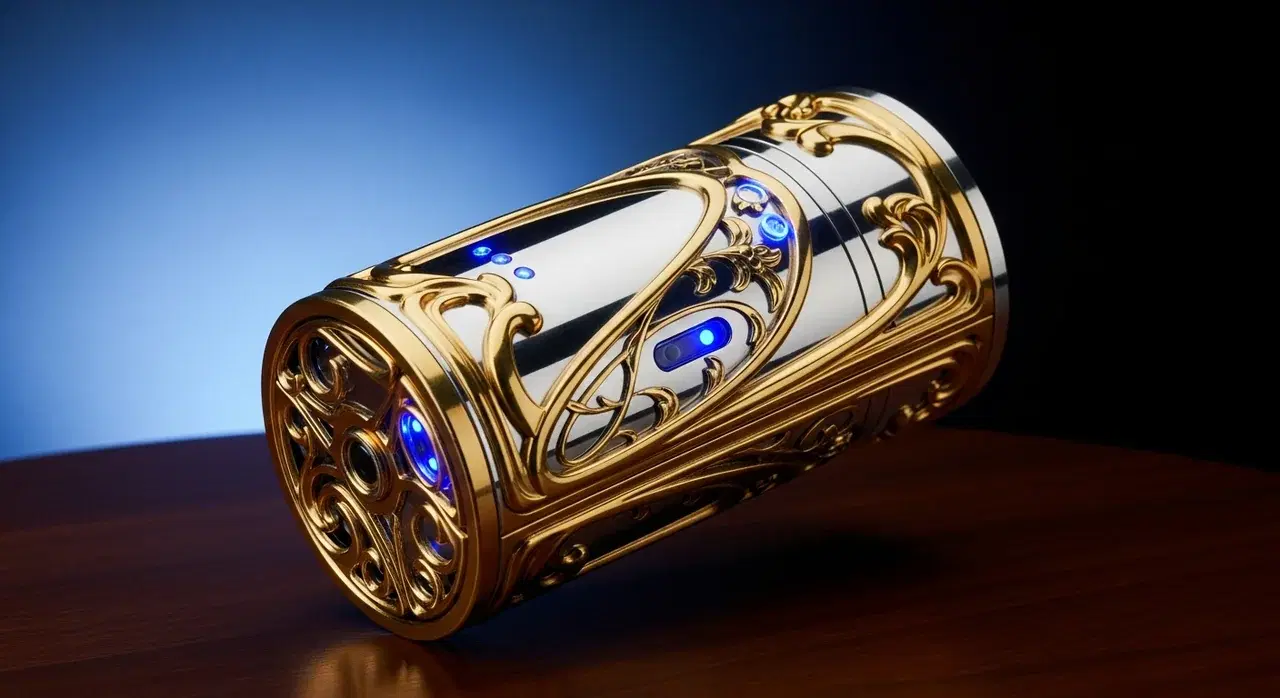
Exploring Sonoluminescence in LENR: A Step Towards Enhanced Control
The vibrant field of Low Energy Nuclear Reactions (LENR) continues its steady march of discovery, and a recent discussion on Reddit's r/LENR community, initiated by u/paxtana, highlights an intriguing technical development: the application of H-bridge designs to sonoluminescence reactors. As of 2026, while LENR remains an experimental frontier, innovations in precise control mechanisms like this are crucial for unlocking its transformative potential.
What is Sonoluminescence and Why Does it Matter for LENR?
For those new to the LENR landscape, sonoluminescence is the phenomenon where sound waves create rapidly collapsing bubbles in a liquid, producing brief flashes of light and localized extreme conditions. Within the LENR context, researchers are exploring whether these implosions can create the unique pressures and temperatures needed to facilitate low-energy nuclear reactions, potentially offering a novel pathway to energy generation. The promise lies in its ability to achieve nuclear-scale energies from macroscopic inputs, all within a contained, non-radioactive environment. It's a fascinating area that could yield compact, high-energy-density systems.
The H-Bridge Design: A Leap in Reactor Control
The Reddit post specifically delves into the H-bridge design for driving sonoluminescence reactors. An H-bridge is an electronic circuit that enables a voltage to be applied across a load in either direction. In the context of sonoluminescence, this is vital for precisely controlling the piezoelectric transducers that generate the ultrasonic waves. Accurate and stable wave generation is paramount for creating and sustaining the conditions necessary for bubble cavitation and potential LENR effects.
- Enhanced Control: An H-bridge offers superior control over frequency and amplitude, allowing researchers to fine-tune the acoustic field. This precision is critical for replicating results and exploring optimal conditions for LENR. It moves the science from qualitative observation to quantitative, reproducible experimentation.
- Efficiency and Stability: Efficient power delivery via H-bridges reduces energy waste, a key factor in developing practical LENR devices. Stability in operation is also enhanced, making sustained experiments more feasible and reliable.
Implications for Our Diverse Community
This technical discussion, while seemingly niche, has broad implications for various segments of the LENR Buyer Guide community:
- LENR Researchers and Technologists: For you, this is a clear sign of progress in experimental control. Reliable H-bridge designs mean more stable testbeds, better data, and a clearer path towards repeatable effects. It's about having the right tools for precision engineering at the atomic level.
- Hobbyists and Experimenters: While full-scale sonoluminescence LENR reactors are not yet consumer products, understanding robust driver circuits like H-bridges provides valuable knowledge for building more sophisticated and stable experimental setups, perhaps for exploring cavitation phenomena or even educational purposes. Safety and precision are always paramount in your endeavors.
- Investors: Developments in control systems, even at this early stage, signal maturity in the research. Reliable driving electronics are a necessary foundation for any future commercial product, indicating that the technology is advancing from pure theory to practical engineering challenges. It's a positive indicator of ongoing R&D investment.
- Preppers and Off-Grid Enthusiasts: For resilient energy solutions, the long-term vision of compact, efficient, and reliable LENR units powered by precise electronics is highly appealing. While still years away, foundational work like H-bridge optimization brings us closer to a future where off-grid power is self-sufficient and robust.
- Ecologists and Clean Energy Advocates: Every step towards greater control and efficiency in experimental LENR is a step closer to a zero-emission, sustainable energy future. These technical advancements are the building blocks for the clean energy systems we all hope to see emerge.
Practical Insights and Future Outlook
For now, the development of H-bridge designs for sonoluminescence reactors primarily benefits the research and development phase. We're not yet seeing commercial sonoluminescence LENR products on the market. However, the open sharing of such designs, as seen on Reddit, fosters collaborative progress within the LENR community, accelerating the learning curve for everyone. It underscores the experimental status of LENR but highlights the persistent ingenuity driving it forward.
At LENR Buyer Guide, we remain cautiously optimistic, emphasizing rigorous testing and evidence. This H-bridge discussion is a testament to the detailed engineering work underway, paving the way for the robust, efficient, and potentially revolutionary LENR devices of tomorrow.
References
- Reddit LENR: LENR Sonoluminescence Reactor H-Bridge Design (u/paxtana) – Link to Reddit Post
Related Articles
Sonoluminescence & LENR: A New Path for Clean Energy?
Explore the buzz around sonoluminescence reactors in LENR. We break down this fascinating research direction and its implications for future clean energy solutions.
American Fusion Inc. Files 20 LENR Patents: What It Means for You
American Fusion Inc. just filed 20 patents in LENR, signaling major advancements. We explore implications for investors, researchers, and energy pioneers.
LENR: Is a Clean Energy Revolution Hiding in Plain Sight?
Exploring the buzz around Low Energy Nuclear Reactions (LENR) as a 'hidden' clean energy revolution. We balance optimism with a realistic look at its 2026 experimental status.