LENR's Enduring Journey: From 2015 Optimism to 2026 Progress
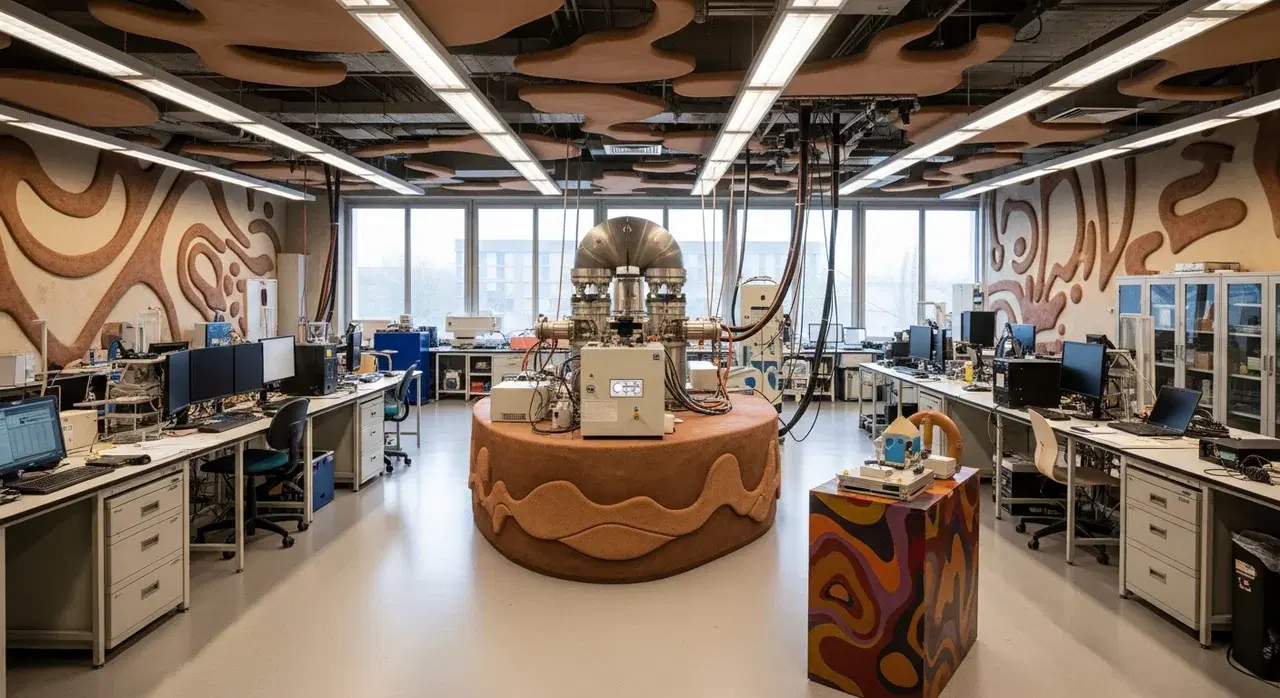
Introduction: A Decade of Momentum in LENR
In 2015, a vibrant piece titled "Live Long and Prosper – Cold Fusion Now!" from the dedicated advocates at Cold Fusion Now ^1^ captured the fervent optimism surrounding Low Energy Nuclear Reactions (LENR). Twenty-six years after the initial announcement by Drs. Pons and Fleischmann, the article painted a vivid picture of a field on the cusp of mainstream recognition, with prototypes multiplying, entrepreneurs self-organizing, and institutional interest beginning to stir. As we stand in 2026, a decade since that publication, LENR Buyer Guide reflects on how those anticipations have matured, transforming vision into tangible, if still experimental, progress.
While we don't yet find LENR reactors on the shelves of Home Depot – a common benchmark of widespread commercialization – the intervening years have indeed seen a remarkable acceleration in research, understanding, and the development of a robust ecosystem. The experimental status of LENR remains central to our honest assessment, but the evidence-based analysis points towards a future far more defined than was imaginable even ten years ago.
The Maturing LENR Landscape: From Vision to Validation
The 2015 article highlighted several pivotal developments that laid critical groundwork for LENR's journey. Figures like Dr. Robert Duncan, a key architect of the Sidney Kimmel Institute of Nuclear Renaissance (SKINR) and later the Center for Emerging Energy Sciences (CEES) at Texas Tech University, were instrumental in fostering institutional research. His vision, alongside the work of Dr. Graham Hubler at SKINR, emphasized rigorous scientific inquiry into the Anomalous Heat Effect (AHE) – the signature excess heat generated in LENR experiments.
Collaborative Research and Growing Understanding
The predicted alliances, such as CEES's partnerships with [ENEA](https://www.enea.it/en "ENEA website" target="_blank"), the Italian National Agency for New Technologies, Energy and Sustainable Economic Development, and researchers from [SRI International](https://www.sri.com/ "SRI International website" target="_blank"), have indeed strengthened. Pioneers like Dr. Michael McKubre (SRI) and Dr. Vittorio Violante (ENEA) continued their groundbreaking work, focusing on robust replication and understanding the underlying mechanisms, including the crucial correlation between excess heat and helium production. These collaborations have significantly advanced our empirical data sets and theoretical models.
While the specific mention of Bill Gates' interest in 2014 ^2^ didn't lead to an immediate, dramatic public investment wave in the way some anticipated, it undeniably signaled a growing awareness among influential figures. This early signal, combined with persistent efforts by advocates like Ruby Carat of Cold Fusion Now and organizations such as the [International Society for Condensed Matter Nuclear Science (ISCMNS)](https://www.iscmns.org/ "ISCMNS website" target="_blank"), has slowly chipped away at the initial skepticism, paving the way for more measured and strategic engagement by private capital and academic institutions in the years that followed.
Today, independent labs and academic centers are not just multiplying, but are increasingly interconnected, sharing protocols and data. The spirit of self-organization around open-science principles, championed by initiatives like [QuantumHeat.org](http://www.quantumheat.org/index.php/en/ "Quantum Heat website" target="_blank") in 2015, has fostered a more collaborative and transparent research environment, crucial for accelerating discoveries.
Key Research Focus Areas in 2026
The pursuit of understanding the AHE, initially deemed "mysterious," has progressed significantly. Researchers are delving deeper into material science, advanced calorimetry, and theoretical frameworks. We've seen substantial progress in areas such as:
- Repeatability: Enhanced protocols have made LENR phenomena more consistently reproducible in specialized labs.
- Material Innovations: Development of novel materials and reactor designs that optimize conditions for energy generation.
- Diagnostic Tools: Sophisticated instrumentation for measuring nuclear byproducts, validating energy output, and ensuring safety.
For a glimpse into the foundational research that set the stage, you can watch Dr. Graham Hubler's [SKINR Overview from ICCF-18](https://www.youtube.com/watch?v=7KC9r_DzsiA "Watch Graham Hubler's SKINR Overview from ICCF-18" target="_blank") from 2013, which remains a valuable historical reference.
Practical Implications for Our Diverse Community in 2026
While LENR technology is still primarily in the experimental and advanced prototyping stages, its trajectory offers distinct implications for our varied audience segments:
- For Investors: The landscape has shifted from pure speculation to strategic early-stage investment in companies demonstrating reproducible excess heat and viable scaling pathways. Focus on IP, robust replication data, and clear engineering roadmaps. The "explosion of interest" foreseen in 2015 is now a steadier, more informed growth. Opportunities exist in advanced material development, reactor design, and diagnostic equipment for LENR research.
- For LENR Researchers & Technologists: The demand for reliable components, advanced experimental systems, and precise measurement tools is higher than ever. Collaboration platforms, shared databases, and open-source hardware designs are becoming essential. Resources like Bob Higgins' paper on [Alumina Spectral Emissivity](https://drive.google.com/open?id=0B5Pc25a4cOM2Zl9FWDFWSUpXcU&authuser=0 "Making Sense of Alumina Spectral Emissivity" target="_blank") ^3^ continue to highlight the rigorous methodological challenges inherent in LENR experimentation.
- For Preppers & Off-Grid Enthusiasts: While turnkey LENR systems for personal use are not yet commercially available in 2026, the progress in miniaturization and energy density offers immense promise for future self-sufficient power. Keeping abreast of developmental prototypes and safety standards is key for planning.
- For Ecologists & Clean Energy Advocates: LENR continues to represent a profound zero-emission, high-density energy solution. Advocacy for sustained research funding and clear regulatory pathways is crucial to accelerate its transition from lab to grid, fulfilling its potential as a sustainable alternative to fossil fuels.
- For Hobbyists & Experimenters: Accessible entry points are slowly emerging. While full-scale replication kits are still complex, educational materials and simplified experimental designs, building on foundational texts like Dr. Edmund Storms' [The Explanation of Low Energy Nuclear Reaction](http://lenrexplained.com/ "The Explanation of Low Energy Nuclear Reaction" target="_blank") ^4^ or Developments in Electrochemistry Science Inspired by Martin Fleischmann ^5^, are becoming more available. Safety remains paramount, and we always advise adhering to established scientific protocols.
The Road Ahead: Balancing Optimism with Rigor
The journey of LENR from a controversial discovery to a respected, albeit still developing, scientific field has been long and arduous. The fervent hopes of 2015 have not manifested in consumer products by 2026, but they have spurred continuous, rigorous research that has yielded invaluable insights. The "ground is formed, and a figure emerging" – this metaphor from a decade ago accurately described the embryonic stage of the LENR ecosystem. Today, that figure is more clearly defined: a global community of dedicated scientists, engineers, and advocates steadily moving towards harnessing this profound energy source.
LENR Buyer Guide remains committed to providing honest, evidence-based analysis as this transformative technology continues its path towards commercial viability. The ultimate goal – a clean, abundant, and decentralized energy future – feels closer than ever, but still demands diligence, transparency, and continued innovation.
References and Further Reading:
- ^1^ Ruby Carat, "Live Long and Prosper – Cold Fusion Now!", Cold Fusion Now, March 2015. [https://coldfusionnow.org/live-long-and-prosper-cold-fusion-now/](https://coldfusionnow.org/live-long-and-prosper-cold-fusion-now/ "Live Long and Prosper – Cold Fusion Now!" target="_blank")
- ^2^ E-Cat World, "Bill Gates Addressed at ENEA by LENR Research Coordinator", November 2014. [http://www.e-catworld.com/2014/11/14/bill-gates-addressed-at-enea-by-lenr-research-coordinator-what-does-he-know-about-lenr/](http://www.e-catworld.com/2014/11/14/bill-gates-addressed-at-enea-by-lenr-research-coordinator-what-does-he-know-about-lenr/ "Bill Gates Addressed at ENEA by LENR Research Coordinator" target="_blank")
- ^3^ Bob Higgins, "Making Sense of Alumina Spectral Emissivity". [https://drive.google.com/open?id=0B5Pc25a4cOM2Zl9FWDFWSUpXcU&authuser=0](https://drive.google.com/open?id=0B5Pc25a4cOM2Zl9FWDFWSUpXcU&authuser=0 "Making Sense of Alumina Spectral Emissivity" target="_blank")
- ^4^ Edmund Storms, The Explanation of Low Energy Nuclear Reaction. [http://lenrexplained.com/](http://lenrexplained.com/ "The Explanation of Low Energy Nuclear Reaction" target="_blank")
- ^5^ Developments in Electrochemistry Science Inspired by Martin Fleischmann. Wiley, 2014. [http://www.wiley.com/WileyCDA/WileyTitle/productCd-1118694430.html](http://www.wiley.com/WileyCDA/WileyTitle/productCd-1118694430.html "Developments in Electrochemistry Science Inspired by Martin Fleischmann" target="_blank")
Additional Resources:
- SKINR Overview from ICCF-18 (Video): [https://www.youtube.com/watch?v=7KC9r_DzsiA](https://www.youtube.com/watch?v=7KC9r_DzsiA "Watch Graham Hubler's SKINR Overview from ICCF-18" target="_blank")
- ENEA (Italian National Agency for New Technologies, Energy and Sustainable Economic Development): [https://www.enea.it/en](https://www.enea.it/en "ENEA website" target="_blank")
- SRI International: [https://www.sri.com/](https://www.sri.com/ "SRI International website" target="_blank")
- International Society for Condensed Matter Nuclear Science (ISCMNS): [https://www.iscmns.org/](https://www.iscmns.org/ "ISCMNS website" target="_blank")
- Infinite Energy Magazine: [http://infinite-energy.com/](http://infinite-energy.com/ "Infinite Energy Magazine" target="_blank")
- QuantumHeat.org (Open Science Initiative): [http://www.quantumheat.org/index.php/en/](http://www.quantumheat.org/index.php/en/ "Quantum Heat website" target="_blank")
Related Articles

Clean Planet's QHe: LENR Nears Commercial Reality in 2026
Clean Planet's Quantum Hydrogen Energy (QHe) is moving towards commercialization with new funding and strong performance claims. Discover its implications for clean energy.
LENR: Is a Clean Energy Revolution Hiding in Plain Sight?
Exploring the buzz around Low Energy Nuclear Reactions (LENR) as a 'hidden' clean energy revolution. We balance optimism with a realistic look at its 2026 experimental status.

ENG8 EnergiCell: From Lab to Industrial Prototypes (TRL 7)
ENG8 International's EnergiCell LENR technology jumps from TRL 4 to TRL 7, moving towards industrial prototyping and potential commercial thermal energy sales in 2026. This could be a game-changer.