DoE Funds Cold Fusion: What It Means for LENR Buyers

DoE ARPA-E Invests in Low-Energy Nuclear Reactions
In a notable development for the energy sector, the U.S. Department of Energy (DoE) announced on February 17, 2023, that its Advanced Research Projects Agency-Energy (ARPA-E) will provide $10 million in funding for eight projects dedicated to studying Low-Energy Nuclear Reactions (LENR), often referred to as "cold fusion." This move marks a significant step towards a scientific and rigorous exploration of this controversial but potentially transformative energy source.
The ARPA-E press release highlights the program's focus on a specific type of nuclear energy, aiming to apply a robust scientific approach to understanding these phenomena. Recipients of this funding include prominent institutions such as Energetics Technology Center, Lawrence Berkeley National Laboratory, and Amphionic, demonstrating a broad engagement from established research bodies. More detailed information on these initiatives can be found in the LENR Project Descriptions.
Understanding LENR and Cold Fusion
For those unfamiliar with the terminology, Low-Energy Nuclear Reactions (LENR) refers to a hypothesized type of nuclear reaction that occurs at much lower temperatures and pressures than conventional nuclear fusion. While often met with skepticism due to early unreplicable claims, the core promise of LENR—clean, abundant energy generation with minimal radioactive waste—has continued to intrigue researchers. The DoE's involvement, particularly through ARPA-E's rigorous scientific mandate, represents a formal recognition and an institutional push to investigate LENR with enhanced credibility.
Implications for Future LENR Buyers and Early Adopters
This $10 million investment from a major government agency like the DoE carries significant implications for anyone monitoring the LENR space, especially potential buyers and early adopters.
Validation and Legitimacy
Firstly, it provides a crucial layer of validation. Government funding from a reputable scientific body like ARPA-E helps move LENR research from the fringes into mainstream scientific inquiry. This reduces the perceived risk and increases the legitimacy of the field, encouraging further private and public investment.
Accelerated Research and Development
Secondly, the funding will accelerate research and development. With dedicated resources, these eight projects are expected to generate more data, refine experimental methodologies, and potentially achieve repeatable results that are essential for scientific consensus. While commercial products are not on the immediate horizon, this is a critical foundational step.
What to Watch For
For buyers and early adopters, this means keeping a close watch on the progress of these funded projects. Look for reports of consistent, verifiable excess heat, nuclear transmutations, or other definitive evidence of LENR. While current applications are still years away, this investment lays groundwork for future energy solutions that could revolutionize power generation. It’s a signal to prepare for a potentially cleaner, more efficient energy future, but also to temper expectations with the understanding that groundbreaking scientific endeavors take time and sustained effort.
Conclusion
The DoE ARPA-E funding marks a pivotal moment for LENR research. It underscores a serious, government-backed commitment to explore low-energy nuclear reactions, offering a glimmer of hope for a future powered by novel, sustainable energy technologies. For the LENR Buyer Guide audience, this news signals a robust, albeit early, phase of development worth tracking intently.
Related Articles
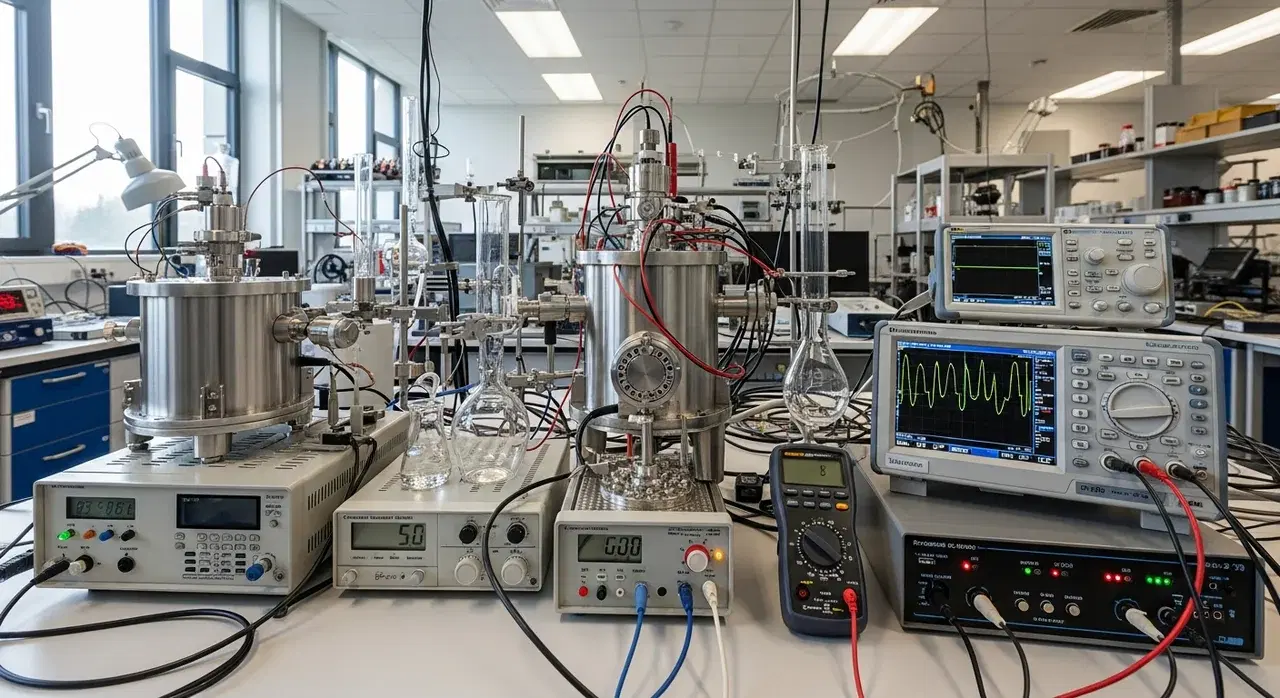
Mizuno Paper Unveils LENR Breakthrough: Heat, Neutrons, EMF
Dr. Tadahiko Mizuno's new paper reports excess heat, neutron emissions, and electromotive force in LENR experiments using SUS alloys, signaling a significant advance.
ICCF-25 Highlights LENR Progress for Early Adopters
The ICCF-25 conference showcased significant advancements in LENR, signaling ongoing progress toward viable clean energy solutions. A key event for future buyers.
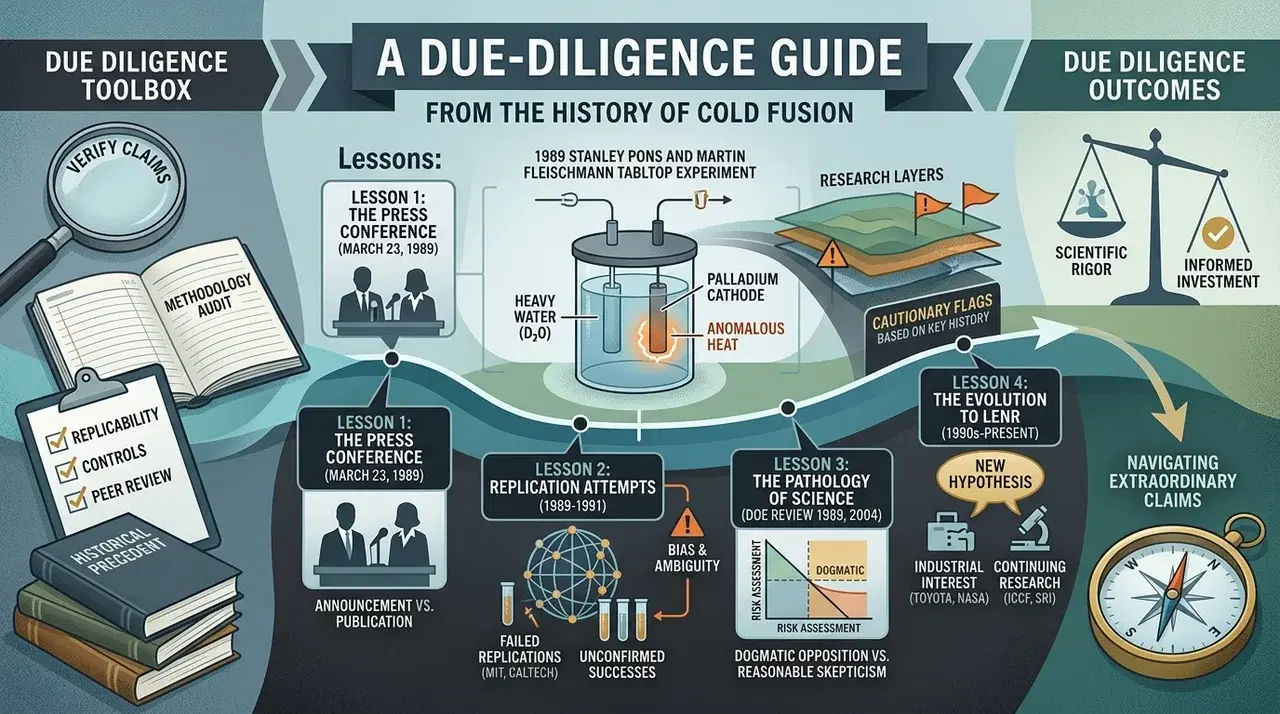
Buying an emerging technology: A Due-Diligence Guide from the History of Cold Fusion
For as long as people have claimed to sell devices that produce more energy than they consume, the claims have shared a recognisable shape. A buyer does not need to adjudicate the underlying physics — a question the scientific community itself has not closed — to protect themselves. They need to ask the questions that skeptics and disappointed investigators have been asking since the [[Fleischmann-Pons announcement]] of March 1989. This guide distils those questions into a due-diligence framework drawn entirely from the historical record: how excess-energy *measurements* go wrong, what independent *reproduction* actually requires, what a hollow *demonstration* looks like, and what past *commercial* devices teach about the gap between a showroom and a working product.