LENR's Systemic Impact: A Buyer's Guide to Market Realities
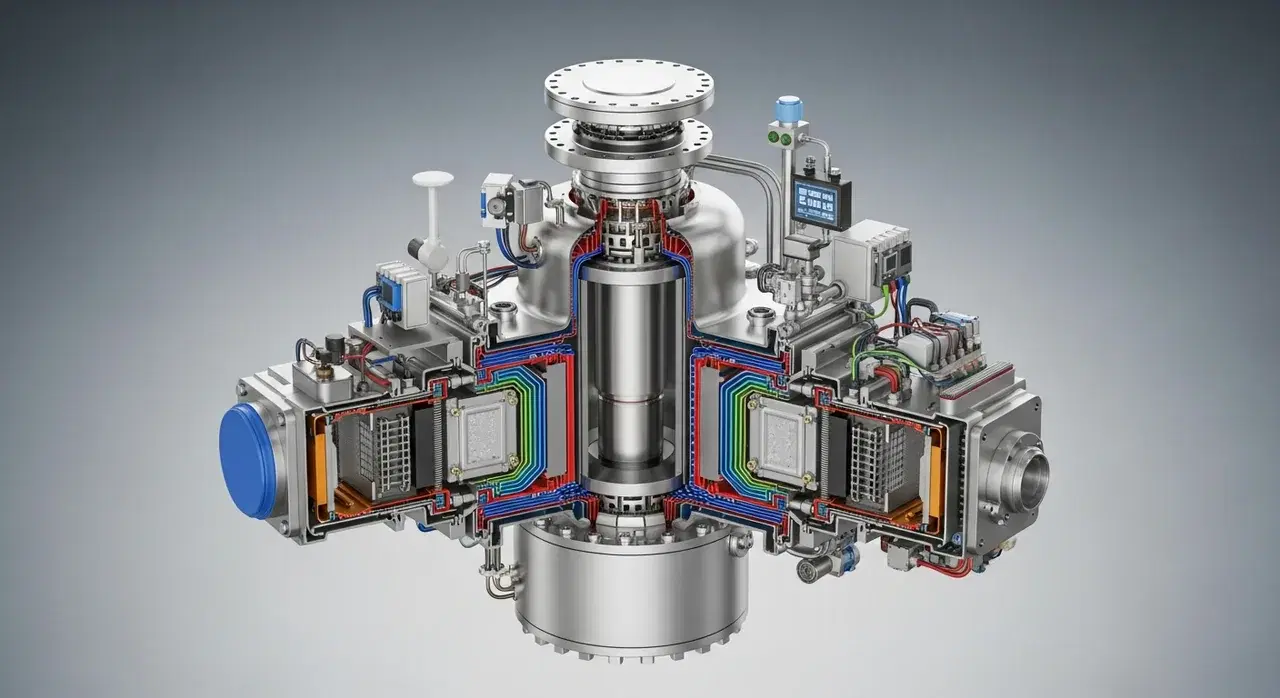
Understanding the Systemic Impact of LENR for Buyers
A recent analysis published on E-Cat World from LENR Wiki sheds critical light on the complex interplay between hypothetical Zero-Point Energy (ZPE) technology—a concept often intertwined with advanced LENR's ultimate promise—and existing global energy structures. For those interested in Low-Energy Nuclear Reactions (LENR), which aim to deliver clean, abundant, and potentially cheap energy, this analysis provides crucial context on the significant challenges to its societal integration. It moves beyond technical feasibility to examine the immense economic and political forces at play.
The Trillion-Dollar Energy Landscape
The article highlights the staggering economic scale of the current energy sector, estimating global annual profits from energy production and supply at approximately USD 3.0 to 4.5 trillion. This vast sum, primarily from fossil fuels, underscores energy's role not just as a commodity, but as a foundational pillar of modern economies, tax bases, and geopolitical power. Any technology like ZPE/LENR, promising extremely low marginal costs, decentralization, and independence from raw materials and existing grids, represents a "systemic singularity"—a disruptive force unlike any before.
Why Consumer Adoption Faces Hurdles
Unlike previous energy innovations that often created new monopolies or infrastructure, ZPE/LENR's idealized form could substitute entire value chains. This level of disruption profoundly impacts regulatory orders, existing grid financing, and state revenues. For buyers hoping for immediate, widespread, and unregulated access to highly decentralized LENR systems, the analysis suggests significant structural constraints. Public finance, grid amortization, and national security policies are deeply intertwined with energy control.
The "Industry First" Deployment Strategy
The most probable path for disruptive LENR technologies, according to the analysis, is a staged introduction. This means initial deployment would target industrial high-performance applications, where systems are more easily regulated, institutionally embedded, and less politically visible. This "industrial first" approach allows for technological maturation and integration into existing systems without immediately triggering mass market effects or destabilizing national economies.
Practical Insights for Early Adopters
For prospective buyers, this implies a few key considerations:
- Gradual Rollout: Don't expect instant, widespread consumer devices. Industrial applications are likely to lead the way.
- Regulated Access: If private ZPE/LENR becomes available, it will likely be tightly controlled, potentially with licensing regimes, usage restrictions, and fiscal integration (taxes).
- Power Thresholds: The article notes that continuous household output beyond 300 to 500 watts could trigger significant regulatory scrutiny due to its impact on grid fees and tax revenues.
- Initial Pricing: As one commenter noted, initial sales prices for LENR devices like E-Cats might be deliberately higher to manage economic disruption, rather than solely reflecting production cost.
In essence, while LENR promises an energy revolution, its path to widespread societal adoption will be shaped more by political economy and systemic stability than by pure technological readiness. Buyers should anticipate a controlled, politically framed, and commercially strategic deployment.
Related Articles

Harold White & Zero-Point Energy: LENR's Theoretical Horizon
Harold White's new paper on 'Emergent quantization from a dynamic vacuum' sparks discussion. Explore its potential relevance for LENR, clean energy, and the future of energy innovation.

LENR's Trillion-Dollar Disruption: ZPE, Profits & Policy
A deep dive into how Zero-Point Energy (ZPE) could reshape global energy, challenging trillion-dollar industries, regulatory systems, and power structures by 2026.
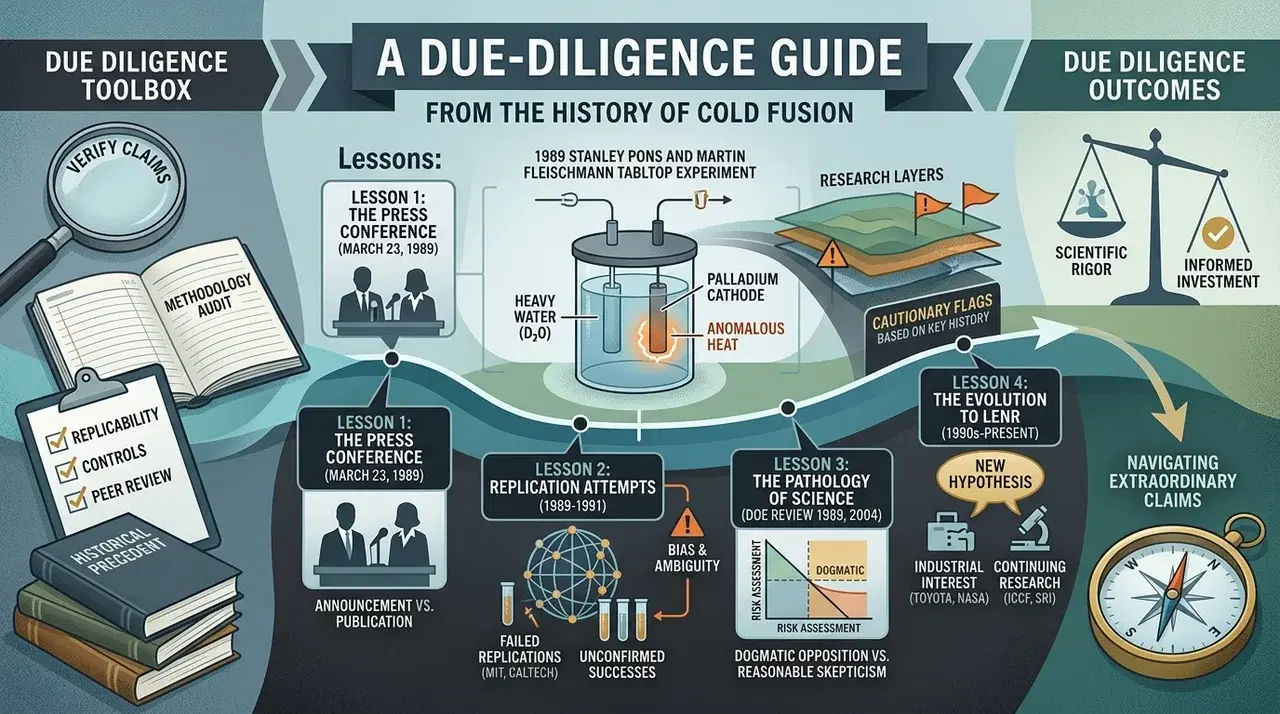
Buying an emerging technology: A Due-Diligence Guide from the History of Cold Fusion
For as long as people have claimed to sell devices that produce more energy than they consume, the claims have shared a recognisable shape. A buyer does not need to adjudicate the underlying physics — a question the scientific community itself has not closed — to protect themselves. They need to ask the questions that skeptics and disappointed investigators have been asking since the [[Fleischmann-Pons announcement]] of March 1989. This guide distils those questions into a due-diligence framework drawn entirely from the historical record: how excess-energy *measurements* go wrong, what independent *reproduction* actually requires, what a hollow *demonstration* looks like, and what past *commercial* devices teach about the gap between a showroom and a working product.