LENR's Trillion-Dollar Disruption: ZPE, Profits & Policy
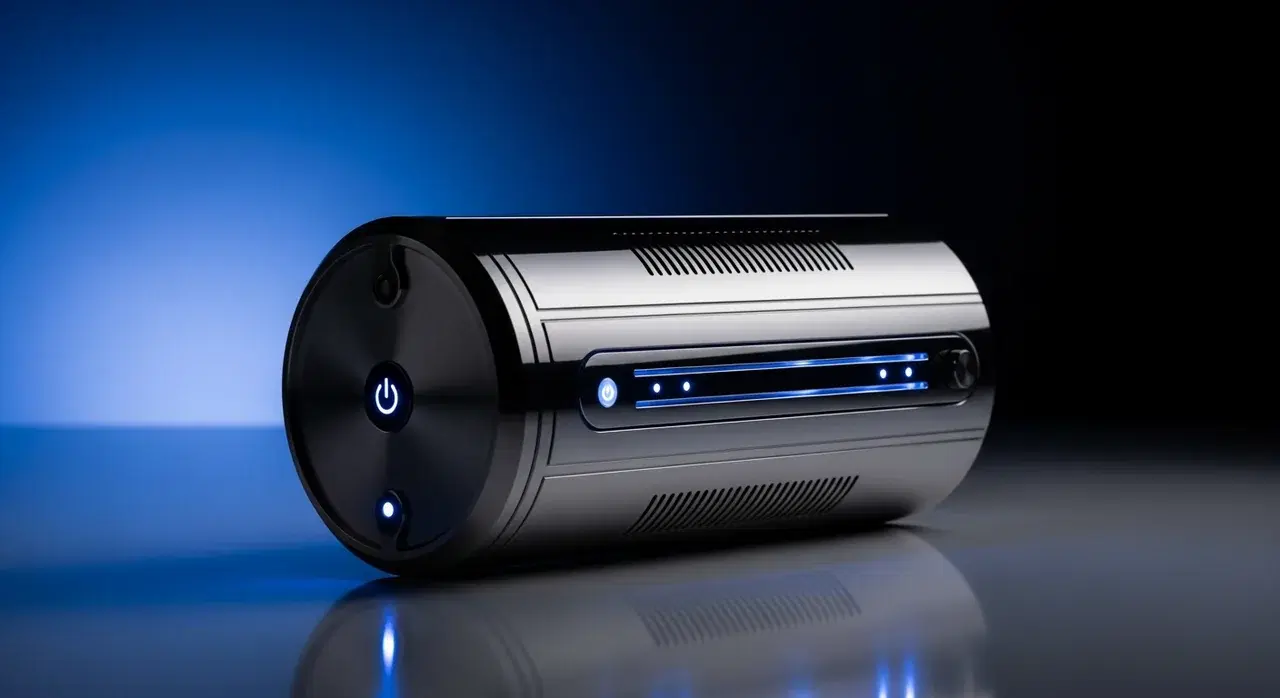
Navigating the Looming Energy Revolution: ZPE's Systemic Impact
At LENR Buyer Guide, we're constantly sifting through the latest developments in Low Energy Nuclear Reactions, a field brimming with both immense promise and complex challenges. A recent article submitted to E-Cat World by LENR Wiki, titled "Zero-Point Energy, Global Energy Profits, and Systemic Stability," offers a refreshingly frank, if sobering, look at the non-technical hurdles facing truly disruptive energy technologies like Zero-Point Energy (ZPE).
This analysis, published just weeks before 2026, doesn't speculate on ZPE's technical viability directly, but rather, on the profound economic and geopolitical implications if such a technology were to become functional and scalable. For our diverse community – from investors and researchers to preppers and clean energy advocates – understanding these structural forces is as crucial as grasping the science itself.
The Trillion-Dollar Battleground: Global Energy Economics
The LENR Wiki article begins by quantifying the immense scale of the incumbent energy system. It estimates the global annual profit from energy production and supply at a staggering USD 3.0 to 4.5 trillion, with a midpoint around USD 3.8 trillion per year. The lion's share of this comes from fossil fuels (USD 2.5–4.0 trillion), with electricity generation/distribution and renewables contributing smaller but still significant amounts. This isn't just about corporate balance sheets; it's the financial bedrock of national budgets, capital markets, and geopolitical power structures.
Why ZPE is Uniquely Disruptive
The article highlights ZPE's "systemic singularity": a combination of extremely low marginal costs, potential continuous availability, inherent decentralizability, and independence from conventional raw materials. Unlike solar or wind, which still rely on grids and land use, an idealized ZPE system could dissolve these dependencies entirely. This isn't merely a market innovation; it's a foundational challenge to the very "ordering principles" of modern society, impacting:
- Existing Infrastructure: Utility grids, pipelines, and charging networks would be undermined.
- Regulatory Order: Intensive energy regulations, taxes, and fees (often 20-40% of end-user prices) would face existential threats.
- Geopolitical Power: Control over energy translates to control over production costs and national security.
The Path Forward: Controlled Rollout vs. Open Access
The LENR Wiki article posits that the introduction of such a profoundly disruptive technology, particularly if originating in the private sector, would encounter "profound structural constraints." It argues for an "industry-first" adoption strategy, where ZPE devices are initially deployed in industrial applications. This allows for technological maturation, data collection, and integration into existing systems without immediate, mass-scale societal upheaval. Such controlled deployment would be easier to regulate and less politically visible.
However, this perspective clashes with the aspirations of many within the LENR community, who dream of decentralized, energy-independent solutions. As comments on E-Cat World reflect, the debate between controlled introduction and rapid, widespread consumer access is intense:
- The "Critical Threshold": The article suggests that private ZPE use becomes "systemically relevant" at just 300 to 500 watts of continuous household output. Above this, grid fees, fiscal revenues, and state control begin to erode, leading to significant opposition.
- Bypassing the Gatekeepers?: Some, like commenter 'Nixter is Nick', argue that if the technology is easily reproducible with common materials, intellectual property protections could be bypassed through minor design changes, potentially leading to a rapid, decentralized spread despite patent challenges. This mirrors the sentiment of 'Jorn-Erik Ommang, Eng.', who highlights open-source initiatives like the Thunderstorm Generator (TSG) as already shipping globally for engine retrofits, promoting "democratize, not delay." Such initiatives claim impressive environmental and fuel-saving benefits (e.g., 99% CO₂ cuts, 60% fuel savings).
- The Speculative Horizon: Commenter 'lkelemen' speculates on a large-scale industrial partner for Andrea Rossi's E-Cat (e.g., Samsung), suggesting a "corporate shield" strategy to navigate these systemic pressures by branding the technology as a "Vacuum Diode Power Supply." Meanwhile, other researchers like Garret Moddel continue to explore Casimir-cavity devices for zero-point-energy harvesting, even if some patents face challenges like 'Abandoned' status as noted by commenter 'S'.
Practical Insights for the LENR Buyer Guide Community (2026)
As of early 2026, ZPE remains largely experimental in its practical application for energy generation, despite intriguing theoretical advancements such as those discussed by 'Axil Axil' concerning exciton polariton condensates and dynamic Casimir effects. The LENR Wiki article serves as a crucial strategic framework, rather than a product review. Here's what it means for you:
- Investors: Recognize the massive market opportunity but also the significant regulatory and political headwinds. Companies pursuing ZPE (or highly disruptive LENR) will need robust strategies for commercialization and systemic integration. Due diligence must extend beyond technical specs to political economy.
- LENR Researchers & Technologists: Your work is not just scientific; it's implicitly political. Consider the systemic impacts of your designs. Innovations that can operate discreetly or offer clear, undeniable industrial advantages might find an easier path than direct consumer devices.
- Preppers & Off-Grid Enthusiasts: The dream of fully autonomous energy is compelling. While smaller LENR systems hold promise, widespread, grid-independent ZPE for household use will likely face significant regulatory friction. Continue to monitor for industrial-scale rollouts as precursors to consumer availability. Don't fall for unsubstantiated claims.
- Ecologists & Clean Energy Advocates: ZPE's zero-emission potential is unparalleled. Advocating for transparent, controlled pathways for integration, perhaps starting with industrial applications to decarbonize heavy sectors, could be a pragmatic approach.
- Hobbyists & Experimenters: The core science, including quantum vacuum energy concepts, is fascinating. Engage with the theoretical discussions (like Sabina Hossenfelder's work on zero-point motion), but approach claims of functional, easily replicable ZPE devices with a healthy dose of skepticism until independent, peer-reviewed verification is widespread. Remember, as 'S' notes, "Hot fusion always 30 years away, cold fusion always 12 months away. Them's the rules."
Conclusion
The LENR Wiki article offers a critical lens through which to view ZPE and, by extension, other profoundly disruptive LENR technologies. The journey to a world powered by clean, abundant, and potentially decentralized energy will be as much about navigating a complex web of economic interests, regulatory frameworks, and geopolitical realities as it is about groundbreaking scientific discovery. Our mission at LENR Buyer Guide is to keep you informed and empowered to make informed decisions as this exciting, challenging future unfolds.
References
- E-Cat World: Zero-Point Energy, Global Energy Profits, and Systemic Stability (LENR Wiki)
- Garret Moddel's Research on Zero-Point Energy Technology
- Garret Moddel's Patents on Quantum Vacuum Energy Devices
- Climate Solutions Tech: Thunderstorm Generator (TSG)
- Sabina Hossenfelder: Hypothetical Zero Point Motion is Real, Clever Experiment Shows
- The Complete Story of the Electrical Grid: Powering Modern Civilization | Science for Sleep
- A Vatican Lab Tested a Fragment of Jesus's Burial Cloth - What Appeared Under UV Is Unexplainable
- Star Trek Economy
Related Articles
Harold White & Zero-Point Energy: LENR's Theoretical Horizon
Harold White's new paper on 'Emergent quantization from a dynamic vacuum' sparks discussion. Explore its potential relevance for LENR, clean energy, and the future of energy innovation.
Rossi's SSM Development: E-Cat Electricity on the Horizon?
Andrea Rossi hints at a breakthrough in Self-Sustain Mode (SSM), potentially shifting E-Cat household units from heating-only to electricity generation. A significant development for LENR.

E-Cat Update: Industrial Power & High-COP Heaters Emerge
Leonardo Corporation announces E-Cat industrial power plants and household heaters, promising high COP. Preorders paused as product specs evolve.